Best Coffee for Life ☕
I will tell you how to make the best coffee so you can go about your day. No bullshit, and this shouldn’t take you longer than 3 minutes and 38 seconds to read 🤓
Long content for the sake of long content is bullshit, and you shouldn’t stand for it, it’s 2023 2026.
Life is too short for bad coffee.
⚠️ Note: This is a work in progress
Preface
This website is produced for those who have complete control over the production of their cup of coffee.
If you do not have control over certain aspects (temperature, etc.) due to the device you use, change the things you can control, such as the freshness and grind of the bean.
🧑🔬 I urge you to experiment with different variables and find out what you like best. You may like a slightly bitter taste in your coffee (and that’s okay). There are nuances to all of these points.
1. Temperature 🔥
The ideal temperature for water is between 85 and 96 degrees Celsius. Generally speaking, you will want to use the upper end. The best temperature is 93 to 96ºC.
We want to extract the natural oils and solubles of the delicious coffee bean without over-extracting it. Over-extracting results in a bitter cup of coffee. The reason for this is that high heat increases the oxidation rate.
If the temperature is too low, you will have a very weak tasting cup of coffee that lacks depth. It will taste bland, maybe even sour.
Maintaining an optimal water temperature is critical in brewing the perfect cup of coffee. Scientific studies suggest that the ideal temperature for water is between 85 and 96 degrees Celsius. More often than not, aiming for the higher end of this spectrum at about 93 to 96ºC tends to yield the best results.
The reason behind this optimal temperature range lies in the extraction process. What we are essentially doing is extracting the essential oils and solubles from the coffee bean that contributes to its taste and aroma. This delicate balance must be struck, as over-extraction can result in an unpleasant bitterness in your coffee.
According to food science research, high temperatures can exacerbate the rate of oxidation - a process that can lead to this bitterness as it starts to break down the flavorful components of the coffee bean.
On the other end of the spectrum, if the brewing temperature is too low, the result is under-extraction. This leads to a coffee that lacks depth in flavor and can taste weak or even sour due to the insufficient extraction of the coffee bean’s flavor compounds.
Tools
Use a thermometer or temperature controlled kettle.
Cold
The optimal brewing time for cold coffee is 12-18 hours. Cold water is recommended for a slow release of flavor.
Cold brew coffee operates on a different set of principles compared to traditional hot water brewing methods. Rather than relying on heat to expedite the extraction of flavor and aroma compounds, cold brewing employs time as a critical factor to achieve a similar result.
According to studies in food science, the optimal brewing time for cold coffee is between 12-18 hours. This might seem like an extensive period compared to a few minutes of hot brewing, but it’s necessary due to the significantly lower temperature of the water.
Cold water is unable to extract the coffee solubles as quickly or efficiently as hot water. This is why we need to extend the brewing time significantly - to allow the cold water sufficient time to slowly but surely extract those desirable flavors from the coffee beans.
As the brew seeps over several hours, it gradually teases out the complex flavors and oils locked within the beans. This slow release of flavor gives cold brew its distinctive smooth, rich, and subtly sweet flavor profile, devoid of the bitterness that can sometimes accompany hot brewing methods.
2. Freshness
Fresh coffee tastes better. Grind your coffee just before brewing. The longer ground coffee has been exposed to air, the more it loses natural aromas and flavour profiles.
Fresh ground coffee lasts for approximately 2 weeks after grinding, but use it sooner than later. The best way is to grind your beans directly before making coffee.
The temperature of your beans do not matter (much), but cold (frozen) beans
can produce better tasting coffee since the beans will heat up less and shatter within the grinder.
The freshness of your coffee plays a pivotal role in its ultimate taste.
The science behind it lies in the volatile compounds within the coffee beans that contribute to its aroma and flavor profile. These compounds begin to degrade and oxidize as soon as the beans are ground, exposed to air and environmental factors.
Studies suggest that freshly ground coffee retains its peak flavor for about 2 weeks post-grinding. However, for the ultimate coffee experience, it is recommended to grind your beans immediately before brewing. This ensures the least possible degradation of flavor and aroma compounds, providing you with a vibrant, fresh-tasting coffee.
While the temperature of your beans doesn’t typically have a significant impact, a unique claim from research here posits that cold or frozen beans can indeed enhance the flavor of your coffee. This is due to the thermal properties of the beans. When beans are cold, they tend to shatter more upon grinding as opposed to breaking down in a uniform manner. This results in a greater surface area for extraction and can lead to a more flavorful cup of coffee.
3. Grind of the bean 🚜
The grind of the bean depends on the method of brewing coffee.
Grind table
| Apparatus | Grind Size | Texture |
|---|---|---|
| Turkish Coffee | Extra fine | Powder and very light, like flour. Stains fingers |
| Espresso + AeroPress + Moka pot | Fine | Soft and a bit finer than table salt.Lightly stains fingers |
| Machine drip | Medium | Smooth sand, fine |
| Drip + Chemex | Medium-coarse | Similar to gritty sand |
| French Press | Coarse | Chunky and flaky like sea salt |
| Cowboy 🤠 | Extra-coarse | Chunks of bean |
| Cold Brew | Extra-coarse | Finely crushed ice |
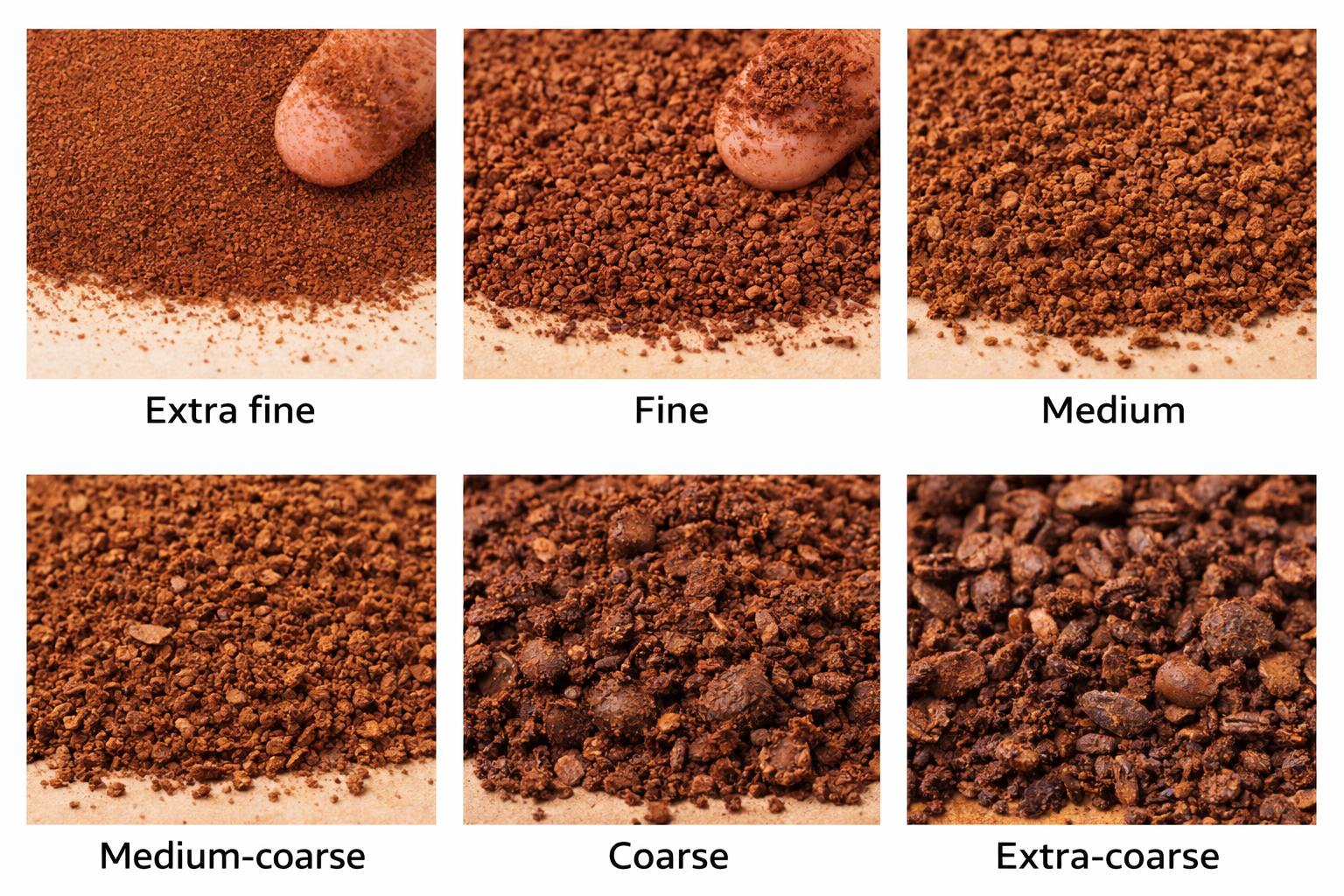
Coffee made in a French press requires medium- to medium-coarse grind. When you brew at high pressure, like an espresso machine, you need a fine grind. This depends primarily on the surface and pressure applied, but also on the method of pressure (water jet vs gravity)
Scientifically, the grind size of your coffee beans has a significant impact on the extraction process and the overall flavor of your coffee. This is due to the surface area exposed to water and the brewing time. A greater surface area and shorter brewing time favor finer grinds, while a smaller surface area and longer brewing time are more suited to coarser grinds.
For example, when using a French press, a brewing method that involves a longer steeping time, a medium to medium-coarse grind is optimal. The larger coffee particles are suitable for this brewing technique as it prevents over-extraction and the passage of grounds into your cup through the metal filter.
In contrast, when using a high-pressure brewing method, such as an espresso machine, a fine grind is necessary. The high pressure and short extraction time associated with this method require a finer grind to maximize the surface area for water contact, enabling optimal extraction of flavors and aromas within a brief period.
4. Time ⏳
The time spent brewing is very important. The length of time will depend how you brew coffee.
Brew table
| Apparatus | Time |
|---|---|
| AeroPress | 2 min |
| French press | 2-4 minutes |
| Drip | 5 minutes |
| Espresso | It’s complicated |
We don’t want to over-extract, otherwise, we will have a bitter cup of coffee. Low time leads to under-extraction, leading to a quick finish and potentially sour tasting cup of Joe. Over-extraction leads to a bitter cup, as the water has extracted all sugars from the bean and begins to break down plant matter.
The science of coffee brewing underscores the significance of brewing time in determining the flavor profile of your coffee. Just as the grind size, water temperature, and freshness of your beans play a role, so too does the duration of the extraction process.
The brewing time essentially dictates how long the water is in contact with the coffee grounds, which in turn affects how much of the coffee’s flavor compounds get extracted. This is a delicate balancing act as both under-extraction and over-extraction can lead to undesirable flavors.
Under-extraction, which occurs when the brewing time is too short, results in an incomplete extraction of the coffee bean’s flavor compounds. This can lead to a weak, underdeveloped flavor that can often taste sour due to the predominant extraction of acidic components.
On the other hand, over-extraction, which occurs when the brewing time is too long, leads to a prolonged exposure of water to the coffee grounds. This causes not just the extraction of desirable flavor compounds, but also the breakdown of cellulose in the beans and extraction of bitter compounds. The result is a cup of coffee with a harsh, bitter taste.
5. Water
The “best” ratio of ground coffee to water is apparatus dependant.
The best ratio is between 1.15 and 1.35, most use the 1.15 ratio.

This means for 1 gram of coffee, you use 15 grams of water (mL).
We want a balanced mouth feel without overpowering notes (generally speaking).
The water-to-coffee ratio significantly influences the strength and flavor of your brew. Coffee science has long been dedicated to uncovering the “golden ratio” for brewing. Although this ratio can vary depending on the brewing apparatus and personal taste preferences, the generally agreed-upon optimal range falls between 1:15 and 1:35, with most people favoring a 1:15 ratio.
To break that down: For every one gram of coffee, you would use approximately 15 grams (or milliliters) of water. This ratio allows an ideal extraction level, providing a balance between the coffee’s flavors and the intensity of the brew.
Maintaining this ratio can give you a coffee with a balanced mouthfeel and a nuanced flavor profile, without overpowering bitterness or acidity.
For a ratio of 1:15 this is our result:
|———————–|————|———————–| | Ground coffee (grams) | Water (mL) | Cups of brewed coffee | | 25g | 375 | 1 | | 50 | 750 | 2 |
Quality 🪣
Low-quality water will impact the taste of the cup. This can be caused by high levels of certain minerals in the water, affecting the taste. Minerals such as sulphur can make water taste bitter. Zinc, iron and manganese can make water taste metallic. I’m not a scientist, research this stuff yourself.
Distilled water or previously-boiled water is best. Don’t use warm water from your tap: it will use water from your water heater tank, which can leech minerals into your water.
6. Filter quality 🍿
This depends on your brewing method. If you are using a pour over or electric coffee maker (RIP), the quality of paper you use will affect the taste. The highest quality filters are made of oxygen-bleached paper. Brown coffee filters can give a paper taste, as they are unbleached. This can be avoided by moistening the filter with water before using it. (This also applies to AeroPress paper filters)
Metal filters filter out fewer particles, but lead to a fuller body taste.
The shape of the filter can also affect the final taste. Cone filters are superior to basket filters due to the higher saturation of coffee ground.
The choice of coffee filter can greatly influence your brewing process and, consequently, the taste of your coffee. The material, quality, and shape of the filter all contribute to the extraction process in distinct ways.
When it comes to paper filters, used in methods like pour-over or certain electric coffee makers, the quality and type of paper matter. Oxygen-bleached filters are considered high-quality due to their minimal impact on the coffee’s taste. Unbleached, brown filters can sometimes impart a papery taste to the coffee. This off-flavor can be mitigated by pre-wetting the filter before brewing.
Metal filters, often used in French press and some reusable pour-over filters, allow more oils and fine particles into the final brew. While this may lead to a bit more sediment, it also results in a fuller-bodied cup with more robust flavors.
The shape of your filter also plays a part. Cone-shaped filters, for instance, can lead to better saturation of coffee grounds compared to flat-bottomed basket filters. This is because the water has to travel through more coffee, increasing the contact time and thus extraction.
Filters made out of corn fiber are tasteless, as well as cotton filters.
7. Coffee Origin and Quality
The type of coffee you use can greatly affect the taste of your brew. Coffee comes from different regions, and each region’s beans have distinctive flavors. Arabica and Robusta are the most common types, with Arabica being the most common. Arabica is regarded for its smooth, slightly acidic flavor, while Robusta is more robust and higher in caffeine content.
Single Origin vs Blend
Single-origin coffee means the beans come from a specific place and are typically higher in quality. Blends, on the other hand, are a mix of beans from different regions and can offer a more balanced flavor profile.
Quality
Always opt for high-quality beans. Look for specialty coffee, which is a term for beans that have scored over 80 points on a 100 point scale by a certified coffee taster or a licensed Quality Grader.
8. Coffee Roasting
Coffee beans need to be roasted before they can be brewed. The level of roast (light, medium, dark) affects the flavor of the coffee. Light roasts are more acidic, while dark roasts are more bitter. The best roast level for you will depend on your personal preferences. Light roasts will have a higher caffeine content.
9. Cleaning your Equipment
Last but not least, keeping your coffee equipment clean is incredibly important. Residue from previous brews can build up over time and spoil the taste of your coffee. Make sure to clean your equipment regularly, especially if you’re using a machine or a reusable filter.
10. Tasting
Learning how to properly taste coffee can also enhance your coffee drinking experience. This involves observing the aroma, acidity, sweetness, body, and aftertaste of the coffee. This might be something fun to look into if you really want to appreciate the nuances of different brews. Taste is largely smell.
Remember, the perfect cup of coffee is subjective, and these guidelines are just a starting point. You may need to tweak these parameters to suit your personal taste.
Happy brewing! 🥳